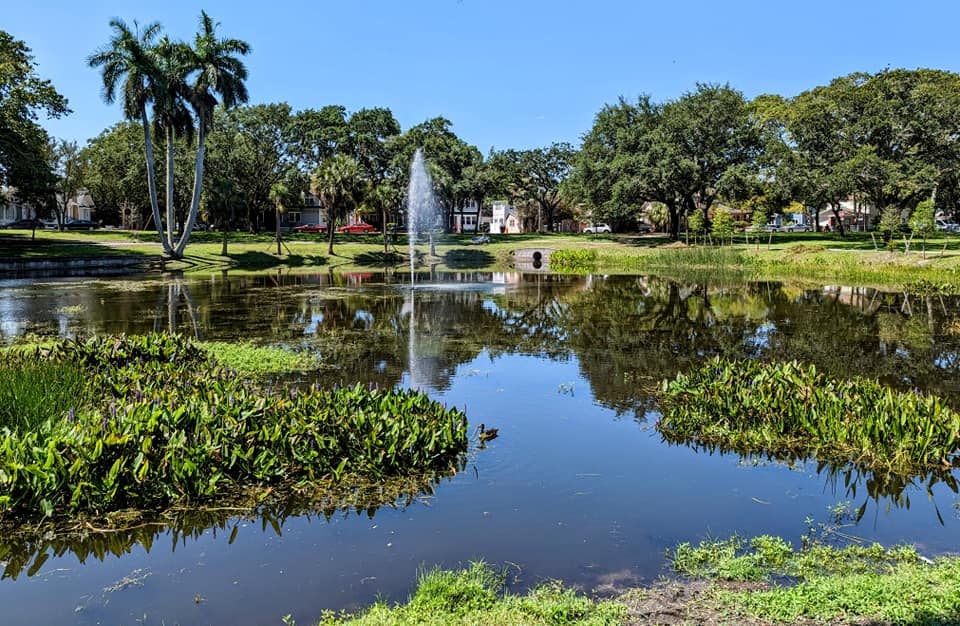
Walk the paved path around Round Lake Park on a Saturday morning and you will pass an ibis picking through the shallows, a jogger cutting the same lap for the third time, and a gazebo that has marked the center of this neighborhood since before most of the houses around it existed. It is a small scene. The lake itself covers about 3.5 acres. But something about this particular loop has changed in the last few years, and its history is worth a closer look.
The water looks good now. Fireflag grows thick along the banks and white ibis wade through the shallows. The path is shaded and used. Within living memory, the lake was closer to a dead pond than a park amenity, while a small cluster of restaurants now sits within walking distance of it.
The Lake Nobody Used To Walk To
Creative Loafing Tampa Bay reported that in 2014, when Adrian Arabitg moved to the neighborhood and started paying attention to Round Lake, there were few if any birds on the water. The surface was clogged with invasive plants, which the city treated with pesticides on a regular schedule. It was a lake in name, part of a park in function, but not a place that pulled anyone off the sidewalk.
The lake's decline did not happen overnight. The lake had already drifted a long way from its earlier life. Decades before, it had hosted Golden Jubilee Pageants and the St. Pete Fishathon, a citywide kids' fishing contest that started here in 1948. By the 2010s, none of that civic use remained. The water had absorbed decades of runoff from an increasingly paved neighborhood around it and had nothing left to show for its history except the name.
Why The Water Came Back
Arabitg and his neighbors formed a group called Friends of Round Lake and started showing up for cleanup days. They partnered with the city, the Historic Uptown Neighborhood Association, Keep Pinellas Beautiful, and a nonprofit called Stewards of Our Urban Lakes, and over time they ended the pesticide spraying and got the invasive plants under control, according to reporting in Creative Loafing Tampa Bay.
The plumbing underneath the park turned out to be its own problem. A pump installed in the 1970s to keep the lake full had broken, and simply fixing it was no longer an option, since pumping groundwater into a manmade lake with no natural connection to the surrounding water table had since become illegal. Meanwhile, decades of impermeable streets and parking lots around the park had cut off much of the lake's natural recharge. The workaround in place now reroutes water to irrigate the park itself, which eventually drains back into the lake, a patch rather than a permanent fix while the city keeps looking for something more durable.
None of this is dramatic. It is closer to the unglamorous maintenance that keeps a small urban lake from quietly dying, done by people who live within a few blocks of it. That work matters to people who use the park.
The Businesses Near The Water
The bier boutique moved to St. Petersburg from its original Ohio location in 2018, and its owners, Scott and Heather Brookey, chose a renovated car garage at 465 7th Ave N, directly across from Round Lake Park. They had five decades of combined restaurant experience between them and picked the spot in part because it let them keep the two things they wanted most, a bike-friendly street and a dog-friendly patio.
Uptown Eats settled into the same stretch of the neighborhood as a breakfast and lunch spot built around locally roasted coffee and made-in-house pastries.
Chef Jeremy Duclut, who already runs a Sarasota-based European bistro called Marcel, is opening a second location at 1225 Dr. Martin Luther King Jr. Street North, in the space that spent the previous seven years as Left Bank Bistro before it closed last fall. What makes this expansion different from Duclut's other restaurant ventures is that he bought the building outright rather than signing a lease, according to St. Pete Rising.
The lake's restoration and nearby restaurant activity are both part of Historic Uptown's changing Saturday scene. The park has a shaded path and birds again, and nearby businesses add stops to a neighborhood walk. Together, they make a route worth exploring.
A Saturday Route Taking Shape
Once Marcel opens, a Saturday in the neighborhood could look like this:
- Start at the gazebo in Round Lake Park, the same spot where the old trolley cars once stopped and passed each other along 7th Avenue North before continuing north.
- Cross the street to The bier boutique for a bison bacon burger or one of its rotating daily specials.
- Walk a few blocks to Uptown Eats for coffee and a pastry made that morning.
- Head over to Marcel for dinner at the restaurant in the building its chef owns rather than rents.
Once Marcel opens, those four stops will offer a combination that did not exist at this density five years ago. For anyone who already lives here, the nearby park and businesses show how a Saturday in Historic Uptown can unfold. The lake's cleanup is one part of that story, shaped by neighbors who kept showing up.
The Takeaway For Anyone Who Already Lives Here
None of this changes what your house is worth or what you should do with it. But it does explain something that is easy to miss if you only measure the neighborhood by its bungalows and brick streets: the lake, its path and nearby businesses offer pieces of a weekend route, alongside the unglamorous maintenance that keeps the park in use.
If you are weighing a move within Uptown, thinking about what a property near the lake is actually worth in daily life, or just curious how a neighborhood's character keeps shifting under long residency, the team at Silver + Welch Collective spends its time paying attention to exactly these kinds of local details. Schedule a free consultation whenever you want a conversation grounded in what is actually happening on the ground here, not just what the listing photos show.