Thinking about moving to St. Pete, but not sure you want to live in the middle of the busiest downtown blocks? Historic Uptown offers a different kind of close-in living. You get a primarily residential setting with quick access to downtown employers, parks, and everyday conveniences, plus the charm of older homes and a neighborhood identity shaped by local pride. If you are trying to figure out whether Historic Uptown fits your move, this guide will help you understand the layout, housing, lifestyle, and practical details that matter most. Let’s dive in.
Historic Uptown at a Glance
Historic Uptown is the current neighborhood association name for the Round Lake area in St. Petersburg. The historic core sits just northwest of downtown, making it a near-downtown neighborhood rather than a waterfront district.
In broad terms, the district is bounded by 13th Avenue North, 4th Street North, 5th Avenue North, and portions of 9th Street North and Highland Street North. That location is a big part of the appeal if you want to stay connected to the downtown core without living right in it.
The neighborhood association describes Historic Uptown as volunteer-run and focused on beautification and civic pride. That gives the area a clear sense of identity, which can matter when you are relocating and trying to find a place that feels established and cared for.
What Historic Uptown Feels Like
Historic Uptown covers about 160 acres and is mainly residential. Round Lake Park acts as a focal point, which helps anchor the neighborhood and gives it a recognizable center.
For many relocation buyers, the biggest draw is balance. You are close to downtown St. Petersburg’s institutions, parks, dining, and services, but the neighborhood itself reads more like a residential grid than a high-activity commercial corridor.
That can be a strong fit if you want a shorter trip to work or downtown amenities, but still value quieter blocks and more separation from the busiest areas. It is one of those neighborhoods where small block-by-block differences matter, so seeing the area in person is especially helpful.
Housing in Historic Uptown
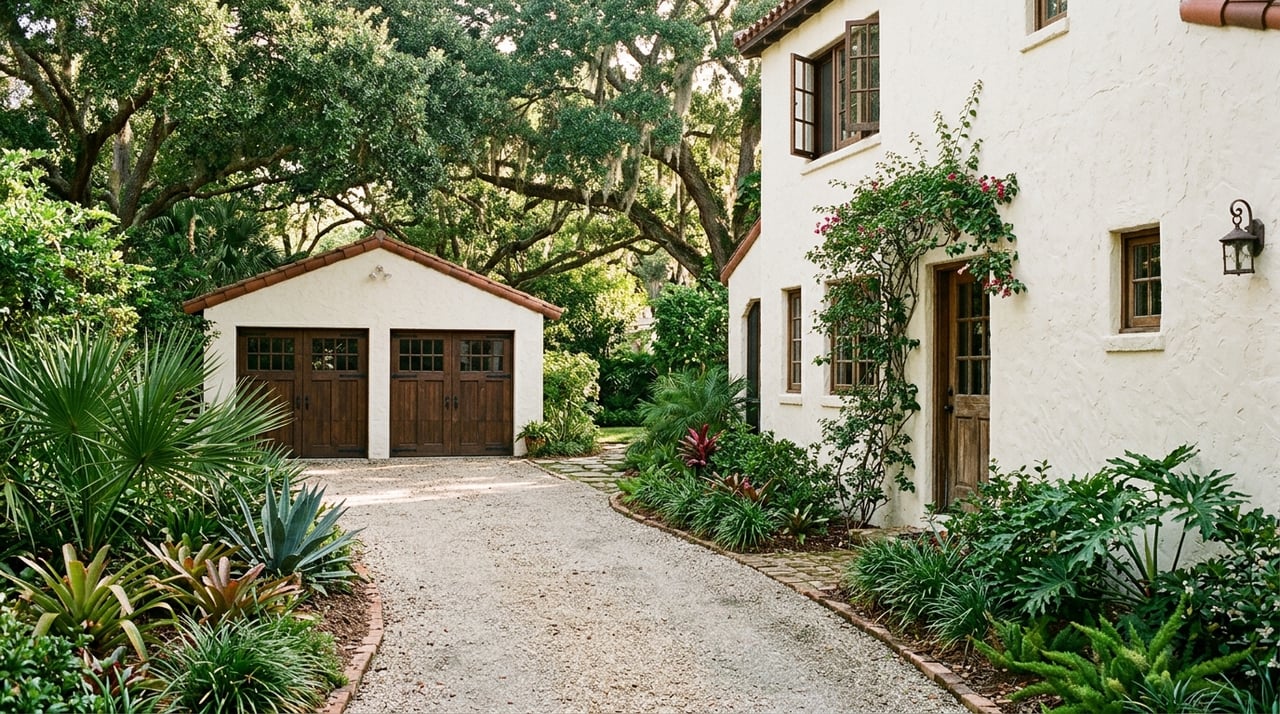
If you are coming from a newer subdivision or master-planned community, Historic Uptown will likely feel very different. The district’s predominant building type is the single-family home, usually one to two stories, and wood frame construction is common.
The area also includes secondary garages and apartments in many cases. That means you may see more variety in lot layouts, storage, and parking setups than you would in a newer neighborhood with more standardized home designs.
Architecturally, Historic Uptown is not a one-style neighborhood. Documented styles include Craftsman Bungalow, Tudor Revival, Mediterranean Revival, Colonial Revival, Prairie, Mission, Classical Revival, Dutch Colonial Revival, American Foursquare, Art Moderne, Minimal Traditional, and vernacular forms in both frame and masonry construction.
For you as a buyer, the key takeaway is simple: expect character and variation. One block may have a very different look and feel from the next, and two homes with similar square footage may differ a lot in layout, updates, garage access, and outdoor storage.
What to Expect From Older Homes
Older homes often bring details that people love, but they also require a more careful eye. In Historic Uptown, mixed renovation levels are part of the landscape, so some properties may feel turnkey while others may show more original features or older systems.
That does not mean one is better than the other. It means your search should focus on how much work, upkeep, or updating you are comfortable taking on once you move.
If you are relocating from out of state, this is where a fact-based approach matters. Listing photos can highlight style and staging, but they do not always tell you how a home functions day to day, especially when it comes to storage, parking, and how the house sits on the lot.
Access to Downtown and Major Employers
One of Historic Uptown’s strongest advantages is location. You are near downtown St. Petersburg and close to major institutions including Orlando Health Bayfront Hospital, Johns Hopkins All Children’s Hospital, USF St. Petersburg, St. Petersburg College’s Downtown Center, St. Anthony’s Hospital, City Hall, and the police department in the downtown core.
That kind of access can make Historic Uptown especially appealing if you are moving for a role in healthcare, higher education, or a downtown-facing professional position. Instead of planning your life around long suburban drives, you may be able to keep your daily routine much more compact.
It also gives you options. Even if you do not work downtown, being close to these anchors often means easier access to services, events, and everyday destinations.
Parks, Errands, and Getting Around
Historic Uptown is primarily residential, but it benefits from being so close to the broader downtown ecosystem. The downtown guide highlights nearby parks including Round Lake Park, Vinoy Park, North Shore Park, North and South Straub Park, Albert Whitted Park, Roser Park, Pioneer Park, Poynter Park, and Campbell Park.
If you enjoy being able to mix neighborhood life with outdoor time, that nearby park network is a real asset. It gives you options for walking, relaxing, and exploring beyond your immediate block.
The downtown directory also includes restaurants, nightlife, specialty shops, shopping, professional services, and parks. So while Historic Uptown itself stays more residential, the surrounding area supports many of the errands and routines that make daily life easier.
Transportation is another plus. The downtown guide lists the Downtown Looper, Central Avenue Trolley, PSTA bus service, Lime bike share, and Veo e-scooters. If you prefer a car-light lifestyle, Historic Uptown is more realistic for that than a typical suburban setting.
Parking Is a Real Relocation Factor
For many buyers, parking will be one of the most important practical issues to understand before making an offer. The City of St. Petersburg’s Good Neighbor Guide explains that residential parking rules exist because improper parking can block sight lines, emergency access, utilities, and stormwater drainage.
The city also provides specific placement rules for boats, trailers, and domestic equipment. If you are moving with extra vehicles or gear, this is worth factoring into your search early.
Downtown parking adds another layer. The city notes more than 25,000 parking spaces downtown, including about 6,500 on-street spaces, with many time-limited or metered blocks, plus public garages and lots and ParkMobile availability.
Because Historic Uptown sits close to downtown but still operates within residential parking rules, you do not want to judge convenience by listing photos alone. Parking can feel very different from one block to the next, especially near busier edges or common destinations.
How to Scout the Neighborhood Well
If you are buying from out of area, a smart scouting trip can save you a lot of second-guessing. In Historic Uptown, it helps to visit at least once on a weekday and once in the evening or over a weekend.
That kind of visit gives you a clearer picture of parking, traffic, and noise at the times you are most likely to be coming and going. A street that feels calm midday may operate differently after work hours or during weekend activity downtown.
Try to study not only the house, but also the immediate surroundings. Look at where people park, how easy it is to pull in and out, and how the block connects to the roads and destinations you would use most often.
A Practical Relocation Timeline
When moving to Historic Uptown from outside the area, a structured process usually works best. The most practical sequence is:
- Remote video shortlist
- Live scouting visit
- Offer and inspection period
- Closing
- Move-in logistics with extra buffer for loading and parking
That extra planning buffer matters here. Since downtown parking is time-limited in many places and the neighborhood is compact, the logistics of moving day can be more nuanced than they would be in a larger-lot suburban neighborhood.
Who Historic Uptown Often Fits Best
Historic Uptown can be a strong match if you want a residential neighborhood with quick downtown access. It is especially practical for out-of-area professionals who want a quieter block pattern than the busiest downtown corridors, while still staying close to work, dining, parks, and waterfront recreation.
It may also appeal to buyers who enjoy older-home character and do not need a fully uniform neighborhood feel. If you like the idea of variety, walkable access to nearby amenities, and an established St. Pete setting, this area deserves a closer look.
The main thing is to go in with clear expectations. Historic Uptown is not about sameness or suburban predictability. Its value comes from location, character, and access, and those are best understood through careful scouting and honest, block-level evaluation.
If you are planning a move to St. Pete and want straightforward guidance on whether Historic Uptown fits your goals, Silver and Welch Collective can help you compare blocks, narrow your search, and make a relocation plan that feels clear and low-stress.
FAQs
What is Historic Uptown in St. Petersburg?
- Historic Uptown is the neighborhood association name for the Round Lake area, a mainly residential historic district just northwest of downtown St. Petersburg.
Is Historic Uptown on the waterfront?
- No. Historic Uptown is an inland, near-downtown residential neighborhood rather than a waterfront district.
What types of homes are common in Historic Uptown?
- The district is known mainly for one- to two-story single-family homes, often wood frame, with a wide mix of architectural styles and varying levels of renovation.
Is Historic Uptown a good fit for relocation buyers?
- It can be a strong fit if you want near-downtown access to employers, parks, and amenities while still living in a primarily residential neighborhood.
Why does parking matter when moving to Historic Uptown?
- Parking matters because the neighborhood is close to downtown, city residential parking rules apply, and block-by-block conditions can vary based on traffic, time-limited parking, and home setup.
How should out-of-area buyers tour Historic Uptown?
- A good approach is to start with a remote video shortlist, then visit in person at different times of day so you can assess the home, the block, parking, and nearby activity more accurately.