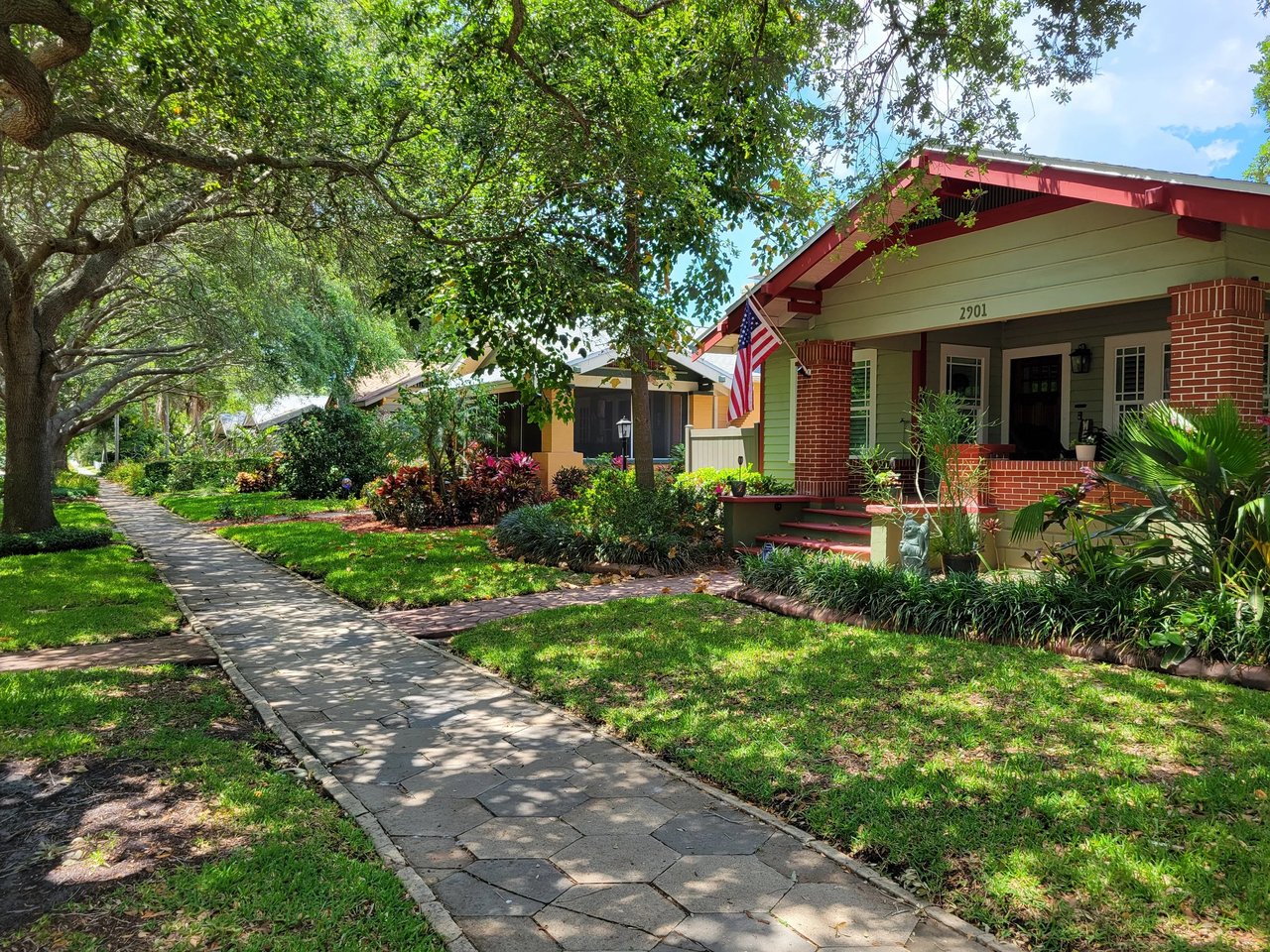
Picture two 1920s bungalows two doors apart on the same block in Historic Kenwood. Both buyers close in the same month. Both want to swap a few original single-pane windows for something more energy efficient and add a small covered porch off the back. One buyer pulls a permit, does the work, and moves on with their spring. The other spends four to eight weeks waiting on a staff review, and if the porch design draws any objection, waits two to four months for a hearing before the city's Community Planning and Preservation Commission decides whether the roofline is appropriate.
Same neighborhood name on the listing. Same era of house. Completely different clocks.
The reason has nothing to do with the house itself and everything to do with a boundary line that most buyers never think to ask about until they're already deep into a renovation plan.
The Boundary Everyone Assumes and the One That Actually Counts
Historic Kenwood was added to the National Register of Historic Places on August 4, 2003, covering roughly 375 acres and 2,203 buildings between 9th Avenue North, 1st Avenue North, I-275, and 34th Street. That's the boundary most people mean when they say "Historic Kenwood." It's the one on the neighborhood association's letterhead, the one real estate listings reference, the one that shows up when you search the address.
For a residential district, National Register status is mostly a badge. It documents that a neighborhood's architecture and history meet federal criteria, and it can matter for certain tax incentives on income-producing property, but it does not, by itself, require anyone to get permission before replacing a window or adding a room. According to the preservation nonprofit Preserve the 'Burg, national designation for residential neighborhoods is largely honorary because it doesn't come with design or demolition review.
The review that actually has teeth lives one layer deeper. Since 2003, the city has carved out Local Historic District overlays inside the Kenwood National Register boundary. According to the Historic Kenwood Neighborhood Association, exterior alterations in these areas need prior approval from the City's Preservation office with a Certificate of Appropriateness.
The city can add to this patchwork over time. In March 2021, the Community Planning and Preservation Commission voted to recommend designating roughly twelve additional blocks in southwest central Kenwood as a local historic district, a move reported at the time by the St. Pete Catalyst. That process runs on resident petitions and council votes, not a fixed map drawn once and forgotten, so the boundary a buyer needs to check today may not match what a longtime neighbor remembers from a decade ago.
What Actually Triggers Review, and What Doesn't
The distinction that trips people up isn't just where the house sits. It's what kind of work they're planning.
Revolution Contractors' Kenwood permitting guide says interior renovations, including kitchens, bathrooms, flooring, and wall removal, don't trigger historic review anywhere in Kenwood, whether a house sits inside a Local Historic District or only within the broader National Register area. The city treats interior work like any standard permit application.
Exterior work is where the overlay matters. Window and door replacements, roofline changes, additions, new fencing visible from the street, all of it routes through the Certificate of Appropriateness process if the address falls inside one of those three LHD pockets. Staff can approve straightforward, well-documented requests fairly quickly. Anything more involved, a second story addition, a porch that changes the home's footprint, gets kicked to the full Commission, and that's where the timeline stretches from weeks into months.
Outside the LHD boundaries but still inside the honorary National Register area, that same exterior project just needs a standard building permit. No design hearing, no Certificate of Appropriateness, no waiting on a Commission meeting date.
What the Waiting Actually Costs
Local remodeling contractors who work Kenwood's bungalow stock regularly publish rough cost ranges for the projects that come up most often in a neighborhood built between 1912 and 1945:
Project | Typical cost range | Added review time if the address sits inside an LHD |
|---|---|---|
Kitchen remodel, galley to open layout | $75,000–$130,000 | None, interior work only |
Bathroom remodel | $20,000–$60,000 | None, interior work only |
Bump-out addition | $60,000–$100,000 | 4–8 weeks staff level, 2–4 months if it goes to the Commission |
Cast iron drain replacement | $10,000–$30,000 | None, under-slab and interior |
Electrical panel upgrade | $3,000–$8,000 | None, interior |
Exterior window replacement matching original profiles | Varies by scope | 4–8 weeks staff level, 2–4 months if it goes to the Commission |
The dollar figures don't change based on which side of the LHD line a house sits on. The calendar does. A buyer planning a bump-out addition who assumes a standard eight to twelve week permit timeline could be off by months if the address happens to fall inside Northwest Historic Kenwood or one of the other two overlays, and that gap matters if the renovation is tied to a move-in date, a mortgage rate lock, or a contractor's own booking schedule.
A New State Law for Small Jobs
Since July 1, 2026, Florida's House Bill 803 has given homeowners statewide a new shortcut for small jobs. The City of St. Petersburg's Building Department now accepts a permit exemption form for single-family work under $7,500, as long as the property isn't in a flood hazard area and the project doesn't touch structural components, mechanical systems, electrical, plumbing, or gas work.
That's good news for a lot of St. Pete homeowners planning modest projects.
How to Find Out Which Kenwood You're Buying Into
Before writing an offer on a Kenwood bungalow with renovation plans in mind, it's worth confirming exactly where the address falls:
- Contact the city's Historic Preservation office directly at 727-892-5451 or 727-892-5470 and ask whether the specific parcel sits inside one of the three Local Historic Districts, not just the broader National Register boundary.
- Ask whether any pending applications could extend LHD status to a block that isn't currently covered.
- If the answer is yes, build the Certificate of Appropriateness timeline into the closing and renovation schedule rather than assuming a standard permit window.
- If the plan involves only interior work, the LHD boundary becomes far less relevant, since kitchens, baths, and systems upgrades don't route through historic review either way.
None of this makes Kenwood a harder place to buy. It makes it a place where the fine print is worth five minutes on the phone before it becomes a surprise three months into a renovation.
A Few Common Questions
Does being in the National Register district affect my property taxes or insurance? National Register status by itself is mostly informational for a single-family home. It doesn't require design review on its own. Insurance and tax questions depend on the property's condition, age, and coverage specifics, and are worth a direct conversation with your insurer and the Pinellas County Property Appraiser rather than an assumption based on the historic label.
Can I find out a property's LHD status before I make an offer? Yes. The city's Historic Preservation staff can confirm whether a specific address falls inside one of the three current overlays, and that call is free and quick to make during the inspection period or even before writing an offer.
If you're weighing a Kenwood bungalow against other options in St. Petersburg, or you already have one under contract and want to understand what a renovation timeline actually looks like before you close, Silver and Welch Collective can walk through the specifics with you. Schedule a free consultation and get a straight answer before the permit clock starts running.
This article is general information, not legal, tax or financial advice. Consult a qualified professional about your situation.