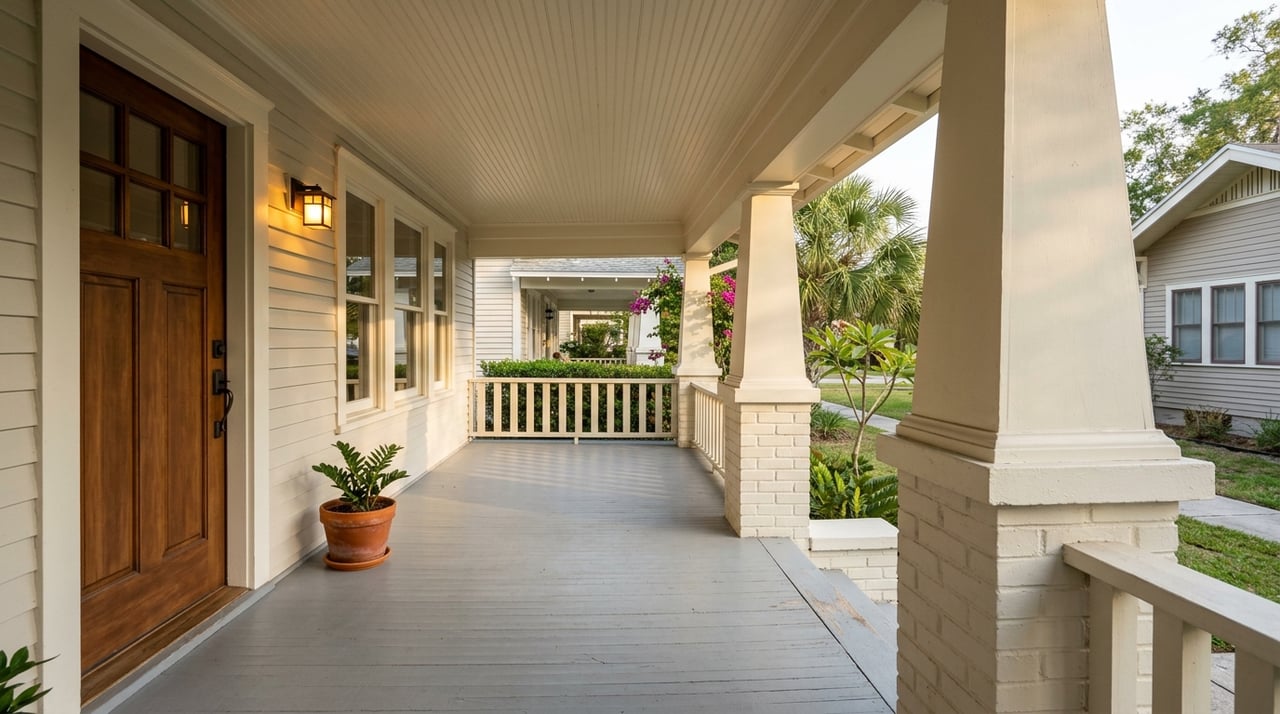
If you are drawn to homes with character, front porches, and a neighborhood layout that still feels tied to early St. Petersburg, Historic Kenwood likely stands out for a reason. Buying or selling here is not just about square footage. It is also about understanding bungalow architecture, preservation rules, and the everyday rhythm that makes this part of St. Pete distinct. Let’s dive in.
Why Historic Kenwood Stands Out
Historic Kenwood began in 1912, when Charles Hall purchased 160 acres of avocado groves about two miles northwest of downtown St. Petersburg. According to the Historic Kenwood Neighborhood Association, it became St. Pete’s first suburb and first year-round residential neighborhood. The area later earned National Register listing in 2003.
That historic identity is not limited to a few blocks. The original National Register district covers about 375 acres and includes 2,203 historic buildings, based on the National Park Service nomination materials. For you as a buyer or seller, that means the neighborhood has a broad, consistent sense of place rather than a single historic pocket.
What Bungalow Living Means Here
When people talk about bungalow living in Historic Kenwood, they are usually talking about a streetscape shaped by porches, alleys, detached garages, and homes that sit in a walkable grid. The historic district includes a high concentration of Frame Vernacular and Craftsman Bungalows, along with other styles such as Tudor Revival, Mediterranean Revival, Colonial Revival, Ranch, Prairie, and American Foursquare, according to the National Park Service documentation.
That mix matters because it gives the neighborhood variety without losing architectural cohesion. If you are home shopping here, you may find one property with a classic full-width porch and another with a different historic style just a few doors down. The overall feel still reads as character-rich and established.
Common Craftsman Features
Many of Historic Kenwood’s bungalows include the classic details buyers picture when they think of early 20th-century Florida homes. The National Park Service notes features such as:
- One- or two-story massing
- Low-pitched gabled roofs
- Wide eaves
- Exposed rafters
- Knee braces or decorative beams
- Tapered square porch columns
- Three-over-one sash windows
- Full-width porches with brick piers or brick railings
For buyers, these details often create the visual appeal that makes bungalow homes feel warm and memorable. For sellers, those same original elements can be important when positioning a home for the market.
The Streetscape Shapes Daily Life
A big part of Historic Kenwood’s appeal comes from how the neighborhood was planned. The area was laid out as a grid with rear alleys, narrow and deep parcels, detached garages or garage apartments, and front porches that face the sidewalk, based on the historic nomination report. Most lots were about 45 to 50 feet wide and 127 feet deep.
That layout still affects how the neighborhood feels today. Homes often engage the street with visible front entries and porches, while parking and service areas are pushed to the rear. It creates a more traditional pattern than you see in many later suburban neighborhoods.
The streetscape also includes brick streets, hexagonal block sidewalks, granite curbing, mature landscaping, and the original alley pattern. These details help explain why Historic Kenwood feels visually distinct even if you are just driving through for the first time.
Seminole Park and Neighborhood Anchors
Seminole Park is one of the clearest examples of Historic Kenwood’s long-standing neighborhood structure. The National Park Service materials describe it as a rectangular park donated by Charles Hall, with perimeter sidewalks and four angled paths.
For residents, a central green space like this adds another layer to daily living. It gives the neighborhood an established focal point and supports the porch-and-park pattern that many people want when they move closer to central St. Pete.
Preservation Matters in Historic Kenwood
If you are considering buying in Historic Kenwood, preservation rules are important to understand early. The Historic Kenwood Neighborhood Association notes that there are four local historic districts in addition to the National Register district, and exterior changes in local historic districts require a Certificate of Appropriateness from the city’s preservation office.
That does not mean every property is identical in what can or cannot be changed. It does mean you should verify how a specific home is designated before making renovation plans. A fact-based review upfront can save you time, money, and frustration later.
Why This Affects Buyers and Sellers
For buyers, preservation can influence:
- Exterior renovation scope
- Window and porch change approvals
- Timeline expectations for projects
- How you budget for updates
For sellers, preservation context can shape how you present the home. Original details, thoughtful maintenance, and accurate marketing can all help buyers understand what makes a Historic Kenwood property special.
A Neighborhood With an Arts Identity
Historic Kenwood is also known for its visible arts presence. The Historic Kenwood Neighborhood Association says the City Council approved the Artist Enclave of Historic Kenwood overlay district in 2014, allowing members to teach classes and sell artwork from home. The enclave also hosts an annual Tour of the Arts each March.
That arts identity extends into the public realm. The same source notes a volunteer Public Art Initiative launched in 2017, with projects including bench art in Seminole Park, street-corner finials, and banners on 1st Avenue North. For many buyers, that adds to the neighborhood’s sense of creativity and place without changing its historic foundation.
Close to Downtown and Grand Central
Location is another major reason Historic Kenwood stays on buyers’ radar. The neighborhood sits about two miles northwest of downtown St. Petersburg, according to the Historic Kenwood Neighborhood Association. That near-downtown position can be especially appealing if you want a historic residential setting with access to the urban core.
City planning context also places Historic Kenwood alongside the Grand Central District, which the association describes as an area of local businesses, shops, restaurants, breweries, and Pinellas Trail access. If you are relocating to St. Pete, this combination often checks two important boxes at once: neighborhood character and central convenience.
Historic Kenwood for Buyers
If you are shopping for a home here, it helps to go in with clear expectations. Historic Kenwood is not usually about brand-new sameness. It is about older housing stock, lot patterns tied to early planning, and details that can vary significantly from one home to the next.
A smart buying approach often includes looking closely at architectural integrity, prior updates, and how a specific home fits within any historic designation. You also want to understand how the detached garage, alley access, porch layout, and lot depth affect your daily use of the property.
What to Look For
As you tour homes, pay attention to:
- Original exterior details that remain intact
- Porch condition and usability
- Rooflines, windows, and trim styles
- Rear alley access and garage setup
- Lot shape and outdoor space layout
- Whether the property sits in a local historic district
This is where calm, neighborhood-specific guidance matters. A bungalow can be charming at first glance, but the right fit comes from balancing charm with practicality.
Historic Kenwood for Sellers
If you are selling in Historic Kenwood, your home’s story matters. Buyers are often looking for more than a list of features. They want to understand the architecture, setting, and what makes the property feel true to the neighborhood.
That means presentation and positioning should be thoughtful. Original elements like porch columns, brick details, rooflines, and historic windows can help anchor the home’s value story when they are photographed and described well.
For some sellers, pre-listing improvements may also be worth considering, especially if the goal is to reduce friction before going live. The team at Silver and Welch Collective takes a practical, no-pressure approach to prep strategy and can help you think through what is worth doing, what is not, and how to bring a Historic Kenwood home to market with clarity.
Why Local Guidance Helps Here
Historic neighborhoods reward local knowledge. Between architectural variation, preservation considerations, and the subtle block-by-block differences that shape buyer perception, accurate context matters.
Whether you are relocating, buying your first bungalow, or preparing to sell a longtime home, a clear process can make the experience much less stressful. If you want straightforward advice about buying or selling in Historic Kenwood, you can schedule a free consultation with Silver and Welch Collective for calm, fact-based guidance tailored to St. Petersburg.
FAQs
What types of homes are common in Historic Kenwood, St. Petersburg?
- Historic Kenwood has a high concentration of Frame Vernacular and Craftsman Bungalows, along with styles such as Minimal Traditional, Tudor Revival, Mediterranean Revival, Colonial Revival, Ranch, Prairie, American Foursquare, Dutch Colonial Revival, Mission, and Romanesque Revival.
What makes a Craftsman bungalow in Historic Kenwood distinctive?
- Common Craftsman details in Historic Kenwood include low-pitched gabled roofs, wide eaves, exposed rafters, decorative beams or knee braces, tapered porch columns, and full-width front porches with brick features.
Are there historic preservation rules in Historic Kenwood?
- Yes. The neighborhood association states there are four local historic districts in addition to the National Register district, and exterior changes in local historic districts require a Certificate of Appropriateness from the city’s preservation office.
How close is Historic Kenwood to downtown St. Petersburg?
- Historic Kenwood is about two miles northwest of downtown St. Petersburg, which gives residents a near-downtown location with established historic housing stock.
What neighborhood features shape daily life in Historic Kenwood?
- The neighborhood is known for its traditional grid layout, rear alleys, front porches facing the sidewalk, brick streets, hexagonal block sidewalks, mature landscaping, and Seminole Park as a central anchor.
What arts features are part of Historic Kenwood?
- Historic Kenwood includes the Artist Enclave of Historic Kenwood, an annual Tour of the Arts, and a Public Art Initiative that has added features such as bench art, street-corner finials, and banners on 1st Avenue North.